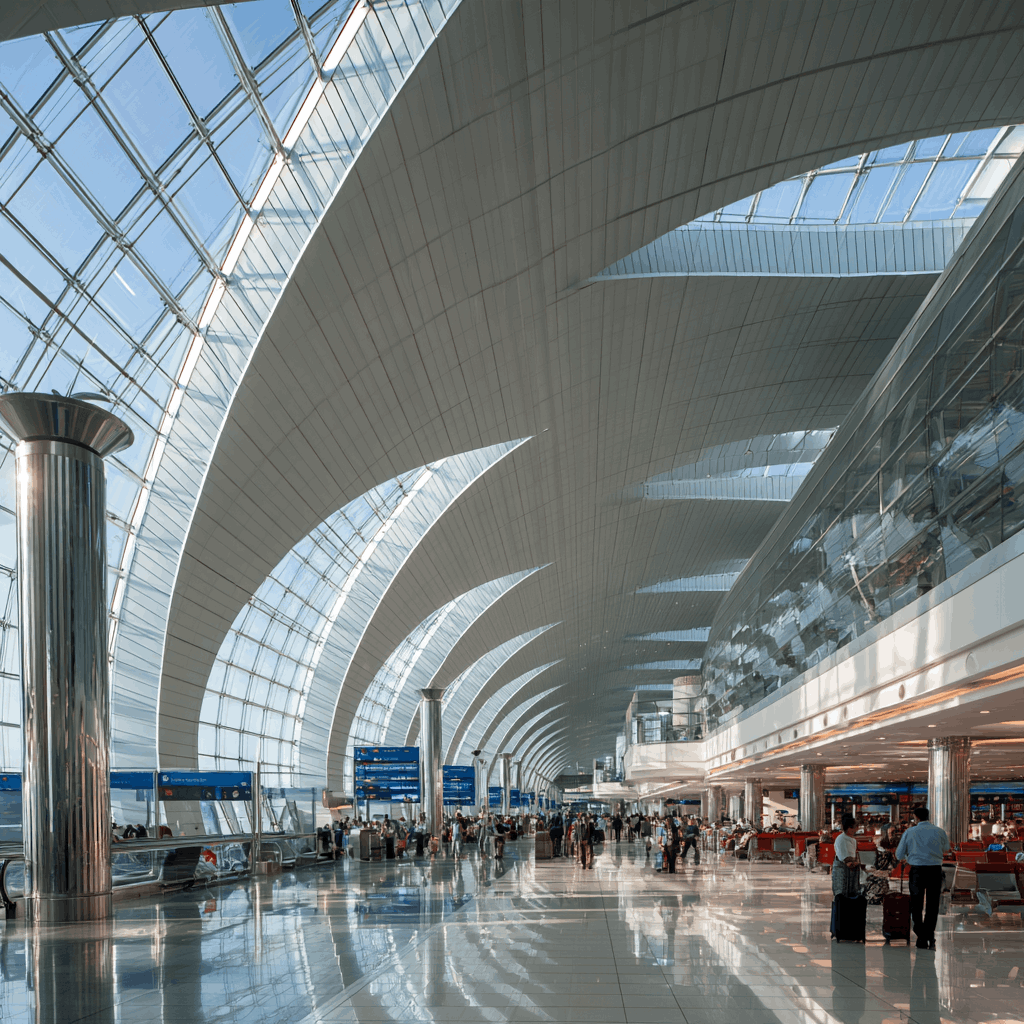
Dubai International is big, bright and designed for high volumes of passengers, which means the distances can surprise you even if the signs look clear. Most traffic moves through the two main terminal complexes, and knowing which one you need before you land already removes a layer of stress.
Once you are off the plane follow the overhead directions for transfers or arrivals. The walkways are long and the moving walkways help, but they do not cover every stretch. If you have a connection, check the board early for the next gate and the estimated walking time. Some gates sit at the far end of a pier and can take twenty minutes at a normal pace. The free internal trains link certain sections, so watch for those signs rather than assuming everything is within easy walking distance.
Food is available throughout the departure areas. You will find quick coffee points, counter service and fuller restaurants. Prices are elevated, as expected in a major hub. If the first places you see are crowded, keep walking. Quieter options often appear further along the concourse and the queues move faster there. Water refill stations exist after security, though they are not always obvious, so fill up when you spot one.
Long waits are common here because the airport handles so many connecting flights. Look for seats away from the main shopping lanes if you want less noise. Some areas have softer lighting later in the evening and feel more restful. Power sockets are built into many seating rows, but the ones nearest the busy zones get taken first. Moving toward the higher-numbered gates usually turns up free ones. A light layer is useful because the air conditioning runs cool around the clock.
Facilities are generally well maintained. Toilets are frequent, prayer rooms are clearly marked, and there are quiet corners if you take the time to look past the central halls. For an overnight stay the same rule applies: claim a spot early in a less trafficked section, keep your belongings close, and set an alarm. Lounges offer a more controlled environment if you have access or decide to pay for a short entry, and some stay open through the night.
When something goes wrong the usual steps work. Delayed or cancelled flights are handled at the airline desks in the departure area. Missing bags are reported at the baggage service counters in arrivals before you leave the hall. Keep your documents and baggage tags easy to reach because you may need them more than once.
Dubai Airport rewards passengers who check the gate early, allow real time for the long corridors, and treat the size as normal rather than a problem. Once you do that the terminal becomes predictable and the hours spent there feel much more under control.

HTML Maker